Polytetrafluoroethylene (PTFE) is a material prized across industries for its remarkable properties: exceptional chemical resistance, minimal friction, and a famously non-stick surface.
Yet, these very advantages present a significant challenge when it comes to industrial processes like bonding, coating, or printing.
Without effective surface preparation, PTFE’s inherent inertness makes these tasks virtually impossible.
This revised guide explores the core purpose of PTFE plasma treatment, detailing the mechanism by which it revolutionizes the material’s surface for superior adhesion.
We’ll also highlight how advanced systems, like those from KeyLink, ensure unmatched reliability and smooth integration into manufacturing workflows.
Overcoming PTFE’s Inert Surface
PTFE’s ultra-low surface energy means it actively repels most substances (adhesives, paints, and functional coatings included).
For years, manufacturers struggled to properly integrate PTFE components into complex assemblies due to this characteristic.
Plasma technology provides the definitive solution. Instead of relying on harsh, bulk-altering methods, plasma modifies the material’s uppermost molecular layer.
This controlled process generates new functional groups on the surface, drastically increasing its energy and making it receptive to bonding agents; all without compromising the bulk mechanical integrity of the PTFE part.
What Plasma Treatment Does
PTFE plasma treatment is a sophisticated, dry surface modification technique.
Components are briefly exposed to a controlled field of plasma, which is essentially an ionized gas.
This field contains highly energized ions and electrons that collide with the PTFE surface.
This bombardment breaks the stable carbon-fluorine bonds, substituting them with new, high-energy, oxygen-containing groups (like carbonyl and hydroxyl).
The transformation achieves several critical goals:
- Significantly boosts surface energy: This is the key to effective wetting and adhesion.
- Introduces chemical anchor points: These newly formed polar functional groups create strong chemical bonds with coatings and adhesives.
- Prepares for the PTFE coating process: It is an essential step before applying spray, liquid, or specialized industrial coatings to ensure they endure.
Crucially, because this is a clean, solvent-free process, it replaces traditional, messy chemical methods.
Plasma’s Core Mechanism
The effectiveness of plasma treatment is rooted in a fundamental, precise physics-based interaction.
The PTFE part enters a sealed plasma chamber.
Once inside, an electric field generates either a vacuum or atmospheric plasma.
The process sequence is rapid and controlled:
- Ionization: Gas molecules are ionized, forming a reactive plasma cloud.
- Collision: Energetic species in the plasma collide with the PTFE surface, specifically targeting the highly stable $\text{C-F}$ bonds.
- Molecular Re-engineering: The freed bonding sites react with process gas elements (often oxygen or air) to form polar functional groups.
- Activation: The creation of these polar groups results in a massive increase in the material’s surface energy ($\text{mN/m}$), shifting it from inert to highly reactive.
This molecular-level surface engineering is why plasma ensures superior, long-lasting adhesion without the material damage associated with abrasive or chemical treatments.

Ideally suited for quick and reliable verification of surface energy on PTFE after plasma treatment. Compact and easy to use.
View CA01 Details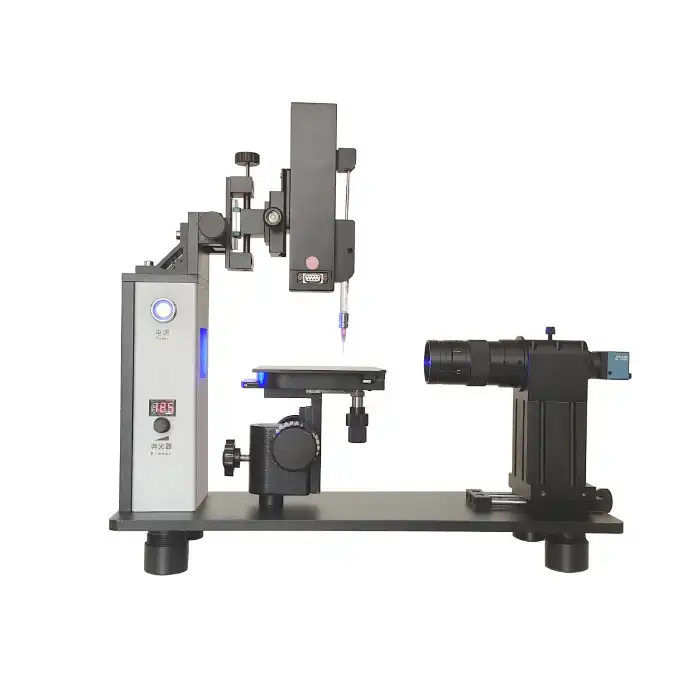
Advanced automated system for precise wetting analysis and high-volume quality control. Perfect for production lines.
View CA02 DetailsPlasma vs. Chemical Etching
The predecessor to plasma treatment, chemical etching, utilized powerful chemicals to strip fluorine atoms.
While functional, this method is fundamentally flawed for modern manufacturing: it creates substantial hazardous liquid waste, necessitates extensive post-treatment rinsing, and delivers inconsistent activation levels.
Plasma treatment is the modern, sustainable alternative. It offers:
- Environmental Responsibility: Zero hazardous liquid waste.
- Superior Control: Fine-tuning of gas flow, power, and duration allows precise modification for specific needs.
- Unmatched Repeatability: High consistency critical for high-volume and high-precision applications.
Elevating the Coating Process
A PTFE coating’s longevity is directly proportional to its initial bond strength with the substrate.
A plasma-treated surface provides the perfect anchor, enabling coatings to spread more effectively (better wetting) and form a uniform, tenacious film.
This translates directly into performance gains: stronger mechanical and chemical adhesion, and consequently, a longer service life for the coating, even in demanding chemical or thermal environments.
Advantages in High-Stakes Manufacturing
The technical benefits of using plasma for PTFE activation are clear, making it a standard requirement across several high-stakes industries:
- Cleanliness: Ideal for medical and electronics components where contamination is unacceptable.
- Automation Compatibility: Easily integrated into fully automated production lines.
- Consistency: Predictable, high-reproducibility necessary for mass production quality control.
- Gentle Processing: Modifies at the molecular level without subjecting the bulk material to stress or heat that could cause deformation.
KeyLink Plasma Systems: Performance and Integration
For manufacturers prioritizing throughput and reliability, choosing the right equipment is paramount.
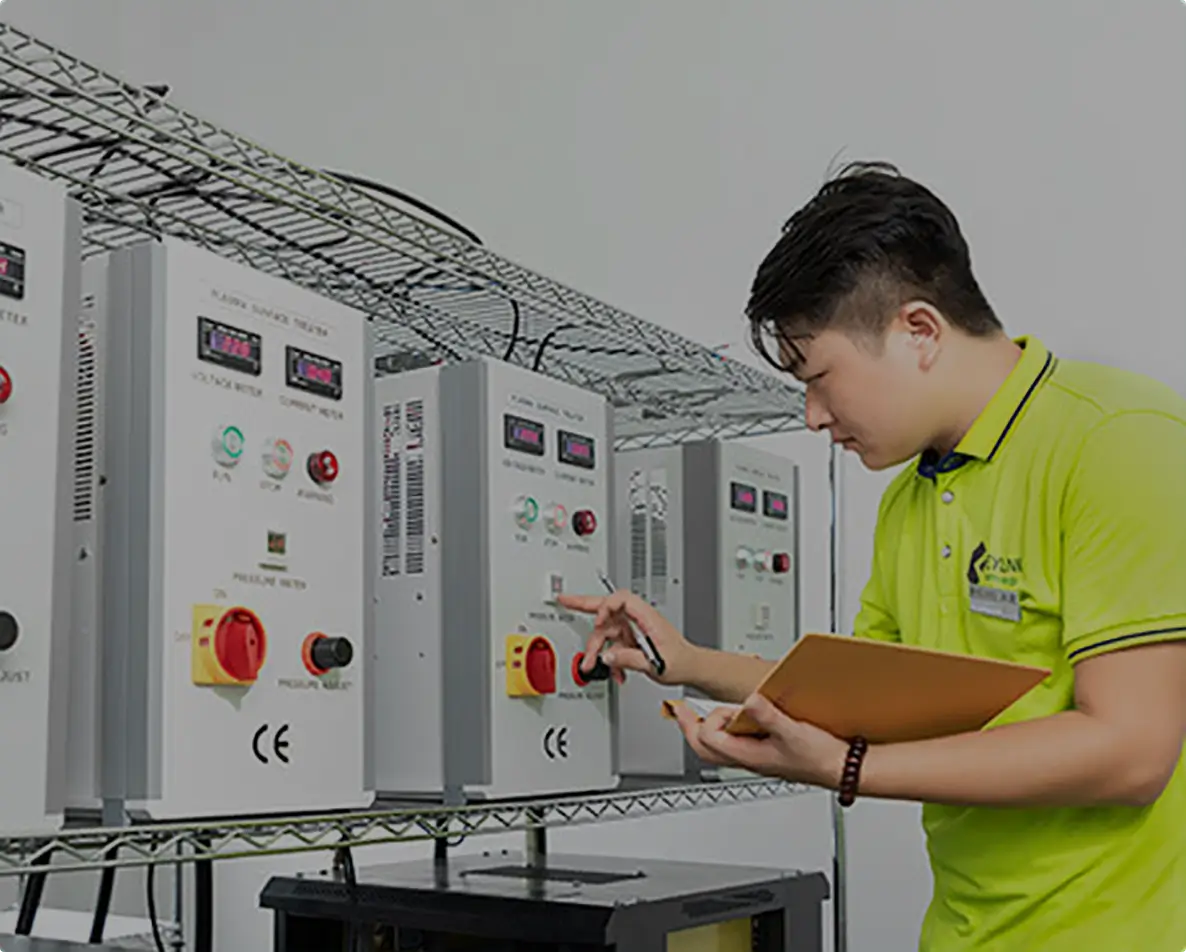
KeyLink Plasma Surface Treatment Systems are engineered for process stability and seamless integration into automated facilities.
Their systems are designed to deliver:
- Dependable Stability: Consistent output during extended, high-volume production cycles.
- Precision Control: Advanced control over plasma density, power, and gas composition for customized activation.
- In-Line Capability: Built for continuous material processing and simple integration into existing production setups.
By using KeyLink’s technology, manufacturers can ensure that every PTFE component receives a uniformly high level of activation, translating directly into reliable product performance and reduced scrap rates.
Industry Applications
Wherever PTFE is used for its non-stick or insulating properties, plasma treatment is required to make it functional for assembly or identification.
Common applications span key industrial sectors:
- Medical: Catheters and specialized tubing where reliable bonding to other components is a safety requirement.
- Aerospace/Automotive: Insulating layers, seals, and hoses requiring robust, long-lasting adhesion of markings or functional layers.
- Electronics: Insulated wires and cable jackets where printing must not flake off.
Final Thoughts: PTFE Plasma Treatment
The necessity of PTFE plasma treatment as a precursor to bonding or coating is undeniable.
It is a powerful, precise tool for unlocking PTFE’s full potential in complex applications.
By partnering with a provider like KeyLink, manufacturing teams gain access to stable, dependable surface activation, ensuring a smooth, predictable, and high-quality coating process every time.