Case Study: Restoring Surface Cleanliness and Brightness of Copper Alloy with Keylink Atmospheric Plasma Systems

Copper alloys are widely used in electrical, electronic, automotive, and precision engineering applications where excellent conductivity, appearance, and surface quality are essential. During rolling, stamping, storage, and handling, the material surface often becomes contaminated with rolling oils, oxidation residues, organic compounds, and airborne particles. These contaminants not only reduce adhesion performance but also diminish the […]
Case Study: Efficient Surface Contamination Removal and Adhesion Enhancement of PTFE Tubes using Keylink Vacuum Plasma Systems

Customer Challenge PTFE (Polytetrafluoroethylene) is widely used in medical devices, electronics, and precision industrial applications due to its exceptional chemical resistance and low coefficient of friction. However, its extremely low surface energy makes it one of the most difficult polymers to print, bond, or coat. Conventional surface preparation methods often fail to produce stable, high-quality […]
Case Study: Efficient Removal of Surface Contamination on Nickel-Chromium Alloys using Keylink Atmospheric Plasma Technology

Surface contamination on nickel-chromium alloy materials is a common challenge in manufacturing processes that require reliable bonding, coating, printing, or welding performance. Oils, rolling residues, organic contaminants, and oxidation layers can significantly reduce surface energy, resulting in poor adhesion and inconsistent product quality. A leading manufacturer of nickel-chromium alloy sheets and rolls sought an efficient, […]
Case Study: Extending Shelf Life of Nickel-Chromium Alloy Materials with Keylink Atmospheric Plasma Systems
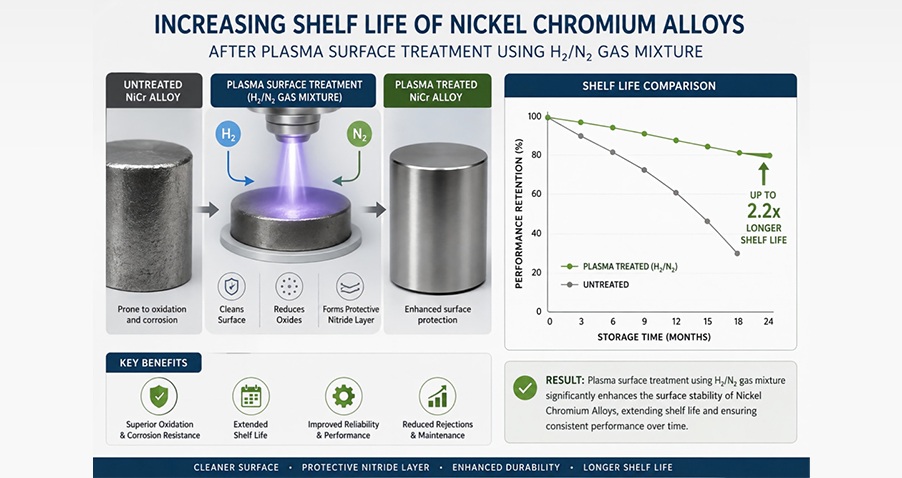
A leading supplier of nickel-chromium alloy sheets and rolls was facing increasing customer complaints related to inconsistent surface quality after storage and transportation. Although the material met all production specifications when shipped, residual rolling oils, organic contaminants, and microscopic surface films gradually affected the surface condition over time. As a result, customers experienced reduced wettability, […]