A contact angle meter, a goniometer, and a tensiometer are not the same instrument, even though suppliers often use the names loosely. Each one measures a different physical quantity, using different hardware. This article breaks down what each device measures, how the hardware differs, and which one fits typical industrial quality control work.
What Does A Contact Angle Instrument Actually Measure?
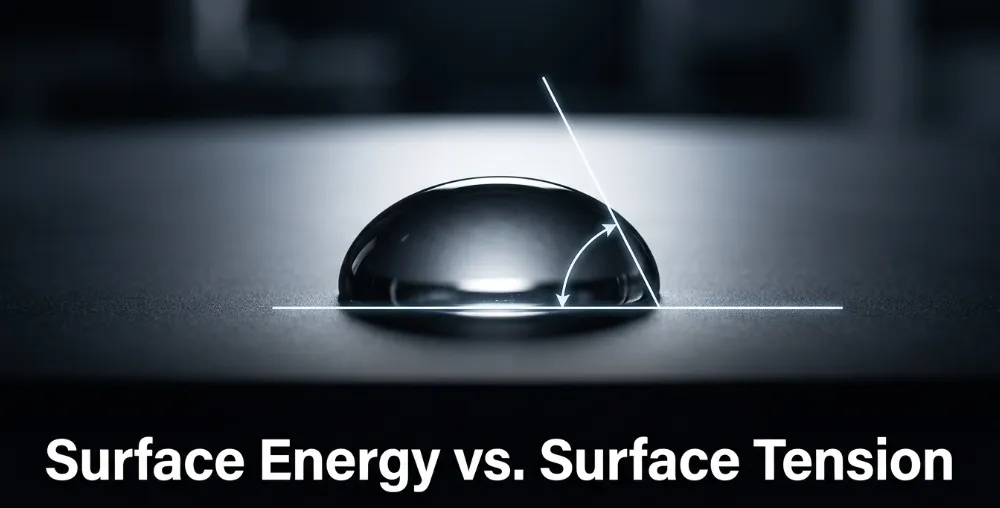
This kind of device measures the angle formed between a liquid droplet and a solid surface. This angle describes solid-state wettability, not the internal properties of the liquid itself. A low angle means the surface wets easily. A high angle means the liquid beads up instead of spreading.
The Physical Quantity Behind Wettability
Wettability depends on surface energy, not surface tension. Surface energy belongs to the solid. Surface tension belongs to the liquid. This kind of instrument links the two through Young’s equation, giving engineers a single readable number for QC records.
Typical Hardware Inside The Device
Most modern units combine a camera, a light source, a syringe for droplet dosing, and image analysis software. The camera captures the droplet profile. The software fits a curve to the droplet edge and calculates the angle automatically, removing manual guesswork from the reading.
How Is A Goniometer Different From This Type Of Device?
A goniometer is technically an optical instrument built to measure angles. In this industry, the term overlaps heavily with a contact angle analyzer because both rely on the same droplet-imaging method.
In practical use, a goniometer and a contact angle instrument often refer to the same testing system. Many suppliers also use the term contact angle analyzer when describing an automated goniometer. The distinction is mostly historical rather than functional.
Optical Measurement Principle
Goniometers use backlighting to silhouette the droplet against a bright background. This produces a sharp edge for the software to trace. Accuracy depends on lens quality, frame rate, and how consistently droplets are dispensed onto the sample.
Where Goniometers Fit In QC Lines
Manufacturers use goniometers to confirm that plasma treatment, corona treatment, or cleaning steps raised surface energy. A drop in contact angle after treatment confirms that the process worked as intended before parts move to bonding or coating.
What Does A Tensiometer Measure Instead?
A tensiometer measures surface tension or interfacial tension of a liquid, not the wettability of a solid. Classic tensiometers use a ring or plate pulled through the liquid surface, recording the force needed to break that surface.
Force-Based Measurement Of Liquid Surface Tension
Where this kind of device reads an angle from an image, a tensiometer reads a force from a balance. Some optical tensiometers now derive surface tension from pendant drop shape instead, blurring the line further with imaging-based instruments.
When A Tensiometer Is The Right Choice
Choose a tensiometer when the question is about the liquid itself, such as ink, coating, or cleaning fluid formulation. Choose this kind of device when the question is about how that liquid behaves on a specific solid part.
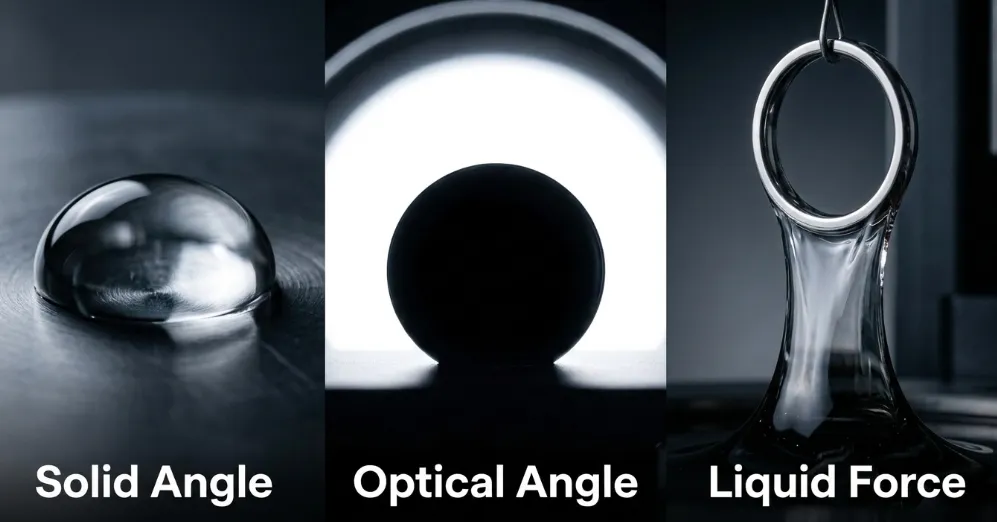
How Do The Three Instruments Compare Side By Side?
| Instrument | Measures | Method | Typical Use |
| Contact Angle Meter | Solid wettability (angle) | Droplet imaging | QC after surface treatment |
| Goniometer | Solid wettability (angle) | Optical, backlit droplet | Lab and line verification |
| Tensiometer | Liquid surface tension | Force balance or drop shape | Fluid formulation testing |
Which Instrument Fits Typical Industrial QC Applications?
For most factory floors, a contact angle meter is the practical choice. It answers the question buyers actually ask: will this surface bond, coat, or seal correctly right now, on this part?
Case Example: Automotive Sensor Housings
An automotive supplier plasma-treats PC and PMMA sensor housings before bonding. A quick droplet reading confirms surface energy exceeds 40 mN/m before parts advance to the adhesive station, catching under-treated batches early.
Case Example: Medical Device Packaging
A medical packaging line checks water contact angle after corona treatment on polymer film, following ASTM D5946. Readings under 60 degrees confirm the seal layer will wet properly during heat sealing.
How KeyLink Technology Supports Contact Angle Measurement
KeyLink Technology has focused on plasma surface treatment for over 15 years, supporting brands including Apple, Valeo, Foxconn, and Bozhon across more than 5,000 application cases. Our optical contact angle measurement systems pair image-based droplet analysis with our plasma treatment equipment, so surface energy verification happens on the same production floor as the treatment step.
Our systems are certified under ISO 9001:2015, GB/T19001-2016, CE, and Intertek, backed by a 20-person R&D team and free sample testing with detailed evaluation reports. For a deeper look at wetting behavior, see our guides on surface energy testing, wettability improvement, and hydrophilic vs hydrophobic surfaces.
If your QC team needs this kind of measurement device that fits directly into an existing plasma treatment workflow, explore KeyLink’s full measurement lineup and request a sample evaluation.


Frequently Asked Questions
Is a goniometer the same as this kind of device?
Largely yes. Both use droplet imaging to measure wettability. The term goniometer refers more to the optical angle-reading mechanism, while the full package includes the camera, software, and dosing hardware together.
Can a tensiometer measure contact angle?
Some force-based tensiometers can derive contact angle from immersion data (Wilhelmy method), but this differs from direct droplet imaging and works best on fibers or thin plates, not flat industrial parts.
What contact angle value indicates good adhesion potential?
Generally, angles below 60 to 70 degrees suggest surfaces that will bond, coat, or print well. Exact thresholds depend on the adhesive, ink, or coating chemistry involved.