Cold atmospheric plasma devices for industrial surface treatment differ from medical or cosmetic plasma tools in scale, power, and automation.
This industrial-grade guide walks buyers through nozzle types, power ranges, and safety monitoring for a production line.
Industrial-Grade Atmospheric Plasma Equipment Explained
This type of industrial plasma equipment generates ionized gas at ambient pressure to clean and activate surfaces without heat damage. Unlike vacuum systems, it needs no sealed chamber, so parts move through on a conveyor or robotic arm. Our overview of what atmospheric pressure plasma actually is breaks down the underlying physics in plain terms.
How Does Atmospheric Plasma Treatment Differ From Vacuum Systems?
Atmospheric plasma treatment operates at normal room pressure using a nozzle or jet aimed directly at the part. Vacuum plasma instead treats parts inside a sealed chamber, which suits complex geometries but adds cycle time.
Why Do Generic Searches Mislead Industrial Buyers?
Many searches for low-temperature plasma return medical and skincare results rather than industrial equipment. Procurement teams should search specifically for industrial-grade systems to avoid comparing the wrong category of device entirely.
For temperature-sensitive substrates, review our guide to handling heat-sensitive materials with cold plasma.
What Technical Specifications Matter Most When Choosing Equipment?
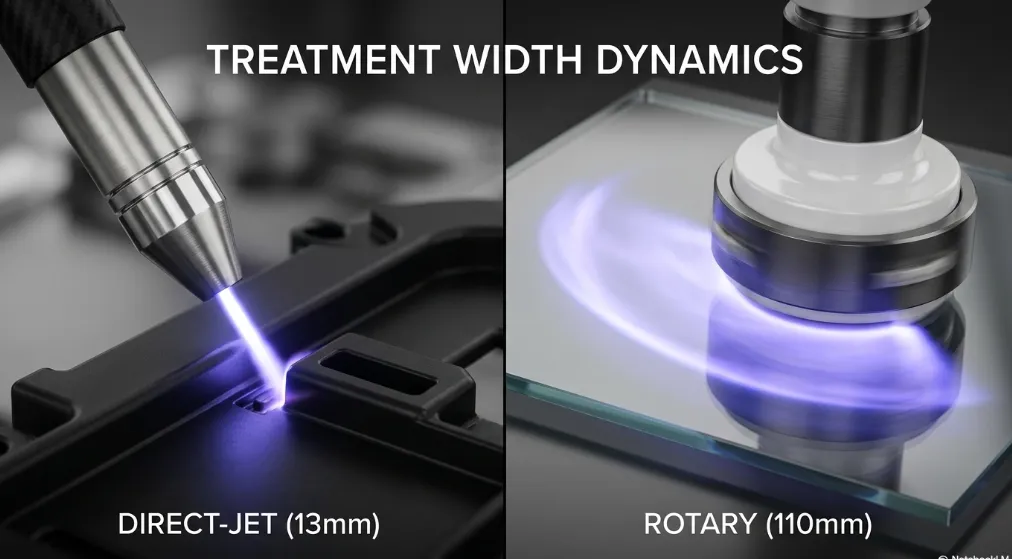
Treatment width is the first filter. Direct-jet nozzles typically cover up to about 13 mm per pass, while rotary nozzle heads extend coverage up to roughly 110 mm for wider parts.
KeyLink’s direct-jet lineup includes the PL-5010, PL-5020, PL-5030, and PL-5010P models, suited to narrow or fine-detail treatment paths. The rotary lineup includes the PL-5050, PL-5050P, and PL-6050P-S models, built for wider panels and higher throughput.
Plasma output power across this range spans 1000VA to 3000VA depending on model and nozzle configuration. Higher output supports faster line speeds or larger treatment areas without sacrificing consistency.
Input Voltage And Gas Requirements Buyers Should Confirm
Most plasma treatment equipment runs on AC220V, with AC110V available for facilities on that standard. Confirm your facility’s supply before ordering to avoid a transformer purchase later.
Gas consumption efficiency also varies by nozzle count, generally requiring 50 to 150 liters per minute of dry, oil-free compressed air. Undersized compressors are a common and avoidable integration problem.
How Does Automation Integration Affect Equipment Choice?
Robotic arm compatibility suits parts with complex or curved geometries that a fixed nozzle cannot reach evenly. Fixed in-line systems suit flat or simple parts on a conveyor at a constant speed.
Safety Monitoring Features Buyers Should Expect
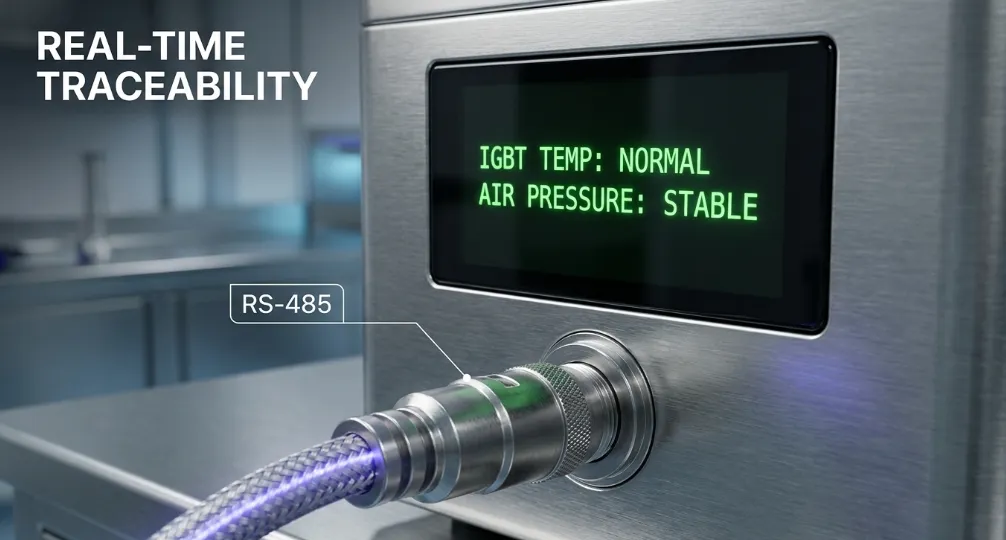
Look for real-time plasma power supply fault alarms that stop the process before a bad part continues down the line. Unstable air pressure alerts and IGBT temperature monitoring protect the equipment during long runs.
An RS-485 communication interface lets the plasma system report status to a factory’s existing line controller, supporting traceability records that quality audits now require.
How Should Buyers Evaluate Equipment Before Purchase?
Request nozzle-specific treatment width data matched to your part dimensions, not a general spec sheet. Ask for a sample treatment report showing surface energy before and after processing.
Confirm quality credentials such as ISO9001, CE, UL, and ETL certification, which matter for global distributors and importers. Our guide on the certifications a reliable plasma treatment machine manufacturer should have lists what to check before signing a purchase order.
A Typical Industrial Selection Scenario
An automation integrator building a machinery assembly line needed plasma pretreatment before adhesive bonding of plastic housings. The housings varied in shape, so a robotic-arm-compatible system was chosen over a fixed nozzle.
The integrator requested a sample test showing surface energy increased from below 35 to above 45 dynes per centimeter. That data supported the equipment decision and justified the cost to their client.
What Mistakes Do Buyers Make When Selecting Plasma Equipment?
Do not size equipment by output power alone without checking treatment width against part dimensions. A high-power unit with a narrow nozzle still misses wide parts.
Avoid skipping the compressed air audit. Underpowered compressors starve the plasma generator of gas flow, causing inconsistent treatment and unplanned downtime.

Conclusion
Global distributors, wholesalers, and equipment importers can request model specifications, distributor terms, sample-testing reports, and an application-specific quotation.
KeyLink Technology is not merely a manufacturer of plasma cleaning machines but a provider of complete surface adhesion solutions. Our direct-jet models and rotary models covered in this buying guide are backed by ISO9001, CE, UL, and ETL certification.
Explore our industrial atmospheric plasma equipment lineup and submit an RFQ based on your treatment width, line speed, material, and automation requirements.
Frequently Asked Questions
What is the difference between cold atmospheric plasma and hot plasma?
Cold atmospheric plasma keeps gas temperature near ambient levels while still generating reactive ionized species. This lets it treat heat-sensitive plastics and electronics without warping or discoloring the material.
Do industrial plasma devices require special ventilation?
Standard shop ventilation is usually sufficient since the process uses compressed air or common process gases. Check your specific gas choice and local regulations for any additional requirements.
Can one plasma device handle multiple nozzle widths?
Some models support interchangeable nozzles or optional bracket kits, letting one generator serve more than one treatment width. Confirm compatibility with your supplier before ordering additional nozzles.
How often does industrial plasma equipment need maintenance?
Routine maintenance typically covers nozzle inspection, air filter checks, and electrode cleaning on a scheduled basis. Actual frequency depends on production volume and compressed air cleanliness.