Flame treatment machines activate plastic and metal surfaces for better bonding in automotive manufacturing. They modify surface chemistry through controlled heat, creating spots where paints and adhesives stick more reliably.

The Importance of Strong Bonding in Automotive Manufacturing
In automotive manufacturing, strong bonding is essential for both safety and performance. A vehicle is constantly exposed to vibration, temperature changes, and environmental stress, so every adhesive joint needs to withstand years of use without failure. High-quality bonding also allows manufacturers to reduce mechanical fasteners, improving design flexibility and lowering overall vehicle weight.
- Interior parts: Components like dashboards, instrument panels, seats, and HVAC systems rely on strong bonds to maintain structural integrity and appearance. Adhesives here must resist heat, UV exposure, and constant handling without degrading over time.
- Exterior parts: Body panels, bumpers, glass, and lighting assemblies require bonds that can handle weather extremes, road debris, and aerodynamic forces. These adhesives must keep components secure while maintaining a clean, seamless look.
To achieve this, many manufacturers use advanced surface preparation methods such as flame treatment or plasma surface activation. These technologies improve adhesion by cleaning and activating the surface, ensuring a stronger, more reliable bond across both interior and exterior parts.
How Conventional Flame Treatment Machines Perform Surface Treatment
Conventional flame treatment machines prepare surfaces for bonding by exposing them to a controlled gas flame. This process changes the surface’s chemical structure and increases surface energy, which improves adhesion between the substrate and adhesives, coatings, or inks. The treatment also removes light contaminants like dust, oils, and residues that could weaken the bond.
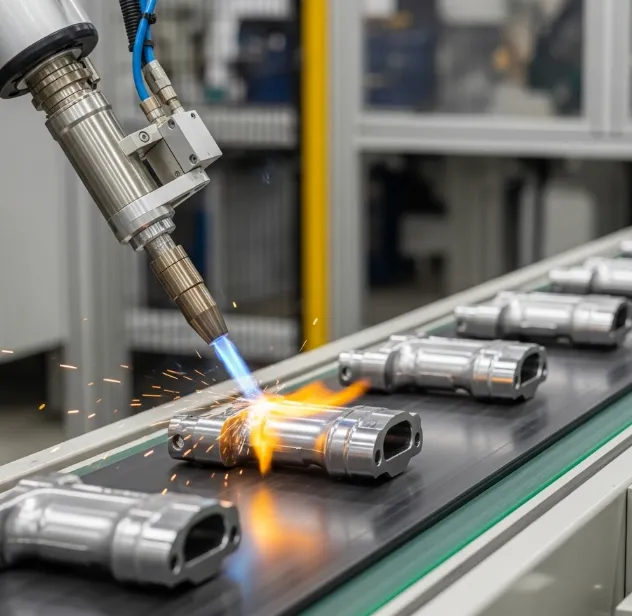
Here’s how the process typically works:
- Surface positioning – The part is placed or conveyed into the treatment area so the target surface is fully exposed.
- Controlled flame application – A burner head emits a precise mix of fuel gas and air or oxygen to create a consistent flame.
- Surface activation – The flame alters the molecular structure at the surface, increasing wettability for better adhesive contact.
Contaminant removal – Heat burns away light debris and organic residues without damaging the substrate. - Immediate bonding or coating – For best results, adhesives, coatings, or inks are applied right after treatment while the surface remains activated.
Flame treatment can be automated with robotic arms to handle multiple shapes and sizes, ensuring consistent and repeatable results at high production speeds.
Keylink’s Plasma Surface Treatment Automotive Solutions: A Modern Alternative
While flame treatment is highly effective, some applications require more precision, lower processing temperatures, or treatment of mixed materials in one cycle. In these cases, plasma surface treatment automotive systems from Keylink provide a strong alternative.
Plasma treatment activates and cleans surfaces without the direct heat of a flame. It works equally well on metals, plastics, composites, and coated materials while ensuring uniform coverage, even on intricate or hard-to-reach areas.
Key benefits of plasma over flame treatment:
- Low-temperature operation to avoid heat damage to sensitive substrates
- Uniform activation on flat, curved, or detailed parts
- No emissions or chemical waste, helping meet environmental targets
- Easy integration into existing lines with minimal layout changes
- Multi-material compatibility for greater production flexibility
Keylink Plasma systems excel where flame treatment struggles. Plastic adhesion automotive processes get better results through molecular-level surface changes that create ideal bonding conditions..
Bonding applications also see significant improvements in strength and durability. Plasma treatment creates chemical bonding sites rather than just rough surfaces, resulting in joints that pass automotive stress tests and last through years of use.
Keylink Plasma Models Suitable for Replacing Flame Treatment Machines

- VL-80-A Vacuum Plasma Treatment System – A high-capacity stainless steel unit ideal for treating larger automotive parts or multiple smaller components in a single cycle.
- VL-10-F Drum Vacuum Plasma Treatment System – Designed for small-batch production and irregular parts, offering 360° rotation for complete coverage.
- VL-10-A Vacuum Plasma Treatment System – Compact and efficient for smaller components or precise activation tasks.
- VLOL-12-A Inline Vacuum Plasma Treatment System – Fully automated inline design for continuous, high-volume automotive production with strict process control.
Each model can be customized for chamber size, electrode configuration, and gas flow to suit specific bonding, painting, or sealing requirements.
Flame vs. Plasma Surface Treatment in Automotive Manufacturing
Flame treatment has long been used for prepping automotive parts, especially heat-resistant ones. But with more plastics, composites, and thin metals in modern vehicles, direct flame can cause warping or discoloration.
Keylink’s plasma systems treat these materials safely while improving adhesion for painting, sealing, and bonding.

| Category | Flame Treatment | Plasma Treatment (Keylink) |
| Processing | Works on robust, heat-resistant surfaces; can damage delicate plastics. | Handles plastics, composites, and thin metals with no heat damage. |
| Cost | Lower upfront cost. | Saves on adhesives, coatings, and rejects over time. |
| Environment | Uses fuel, produces emissions. | Zero-emission, clean process gases. |
| Integration | Needs fuel storage and exhaust. | Compact, modular, fits in production lines. |
Final Thoughts
Although flame treatment remains common in automotive manufacturing, plasma is catching up fast. It handles plastics, composites, and thin metals without heat damage while delivering stronger, more consistent bonding. With systems like Keylink’s VL-80-A, VL-10-A, and VLOL-12-A, manufacturers get speed, reliability, and easy integration into existing lines.
So ask yourself, can your production afford to keep missing the precision, efficiency, and quality that plasma delivers?