If you’re treating heat-resistant metals in large areas, flame cleaning can be used, but it has clear limitations compared to plasma cleaning. If you need precise, low-temperature treatment for plastics, composites, or mixed materials, plasma cleaning will deliver better adhesion and stability.

Why Surface Treatment Works for the Automotive Industry
Surface treatment is essential for achieving strong, durable bonds in automotive manufacturing. From car interior bonding to exterior trim assembly, the process you choose impacts adhesion quality, product lifespan, and production efficiency.
Flame and plasma cleaning are both used in automotive surface preparation, but plasma cleaning is generally more versatile and reliable. Understanding these differences will help you select the technology that can meet your adhesion, cost, and integration goals.
Flame Cleaning Overview
Flame cleaning exposes a surface to a high-temperature flame, which burns away grease, oil, and dust. It is mainly used for metals and other heat-resistant materials, but it is less suitable for plastics or mixed-material parts.
For metal surface cleaning in automotive plants, flame systems can handle heavy contamination and treat parts quickly. However, it’s less suited for plastics or materials sensitive to heat.
Keylink Plasma Cleaning Principles and Advantages
Plasma cleaning uses a different approach. Keylink systems generate plasma to physically and chemically remove contaminants. This treatment happens at low temperatures, making it suitable for a wider range of materials.
Keylink’s plasma cleaning technology is known for:
- Precision treatment – Plasma reaches micro-fine levels of cleanliness, ideal for delicate or heat-sensitive parts.
- Low temperature – No thermal damage to plastics, composites, or thin metals.
Greater stability – Uniform treatment across complex geometries. - High throughput – Multiple parts can be processed simultaneously, increasing efficiency.
For plastic adhesion treatment, plasma cleaning creates a high-energy surface that improves bonding between base materials and adhesives. Such an outcome is critical for components like dashboards, door panels, and lightweight composite parts.
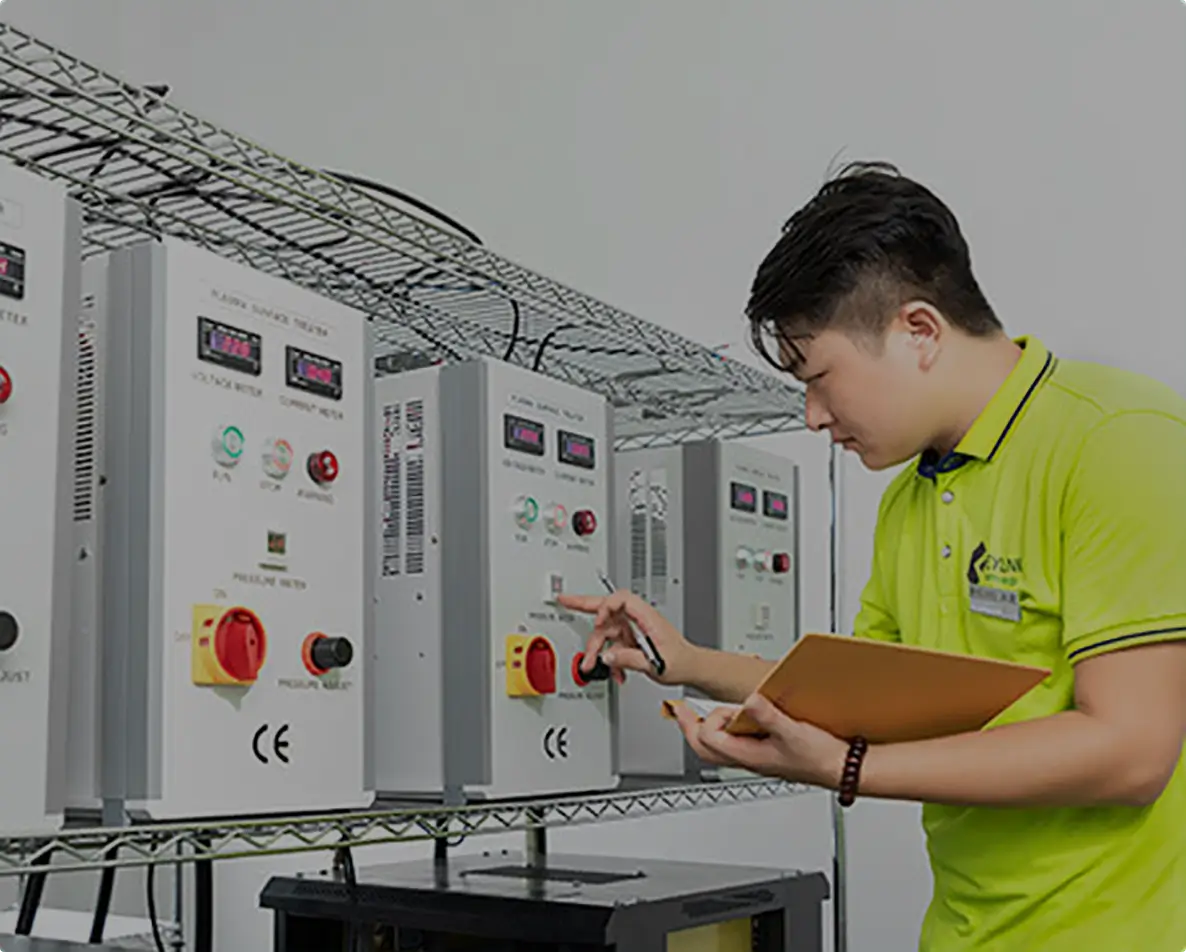
Keylink offers plasma cleaning systems for automotive manufacturing, including models such as the PL-6050P-S, which support inline automotive surface preparation while maintaining fast production speeds.

Comparative Analysis
When comparing flame cleaning and plasma cleaning, several factors can guide your decision:
Adhesion Improvement
Both methods improve adhesion, but plasma treatment provides higher consistency, especially on plastics and composites. If you’re working on car interior bonding, plasma cleaning can create a more stable surface for adhesives.

Material Compatibility
Flame cleaning works best on heat-resistant metals and large surfaces. Plasma cleaning covers a wider range, including heat-sensitive plastics, glass, and coated metals — making it more versatile for mixed-material assemblies.
Environmental Impact
Plasma cleaning generates no hazardous waste and uses minimal consumables. Flame cleaning, while relatively low-cost, produces combustion by-products and requires fuel storage.
Operating Costs
Flame cleaning equipment has a lower initial cost, but plasma systems often save more over time by reducing adhesive consumption and rework. Keylink’s plasma technology can lower coatings and adhesives usage by up to 30%.
Equipment Configuration and Integrability
Plasma cleaning equipment can be integrated into existing lines with minimal modification. Keylink systems offer compact designs and automated controls for consistent results. Flame cleaning systems are also integrable but require more attention to ventilation and safety measures.
Specific Automotive Applications
Both flame cleaning and plasma cleaning have distinct strengths in automotive manufacturing. Understanding where each works best will help you choose the right process for your components.
Where Flame Cleaning is Typically Used
Flame cleaning is sometimes applied to metal parts with heavy contamination, such as body panels or frames. However, its application is limited, especially when plastics, composites, or delicate materials are involved.
Where Plasma Cleaning Excels
Plasma cleaning is best for heat-sensitive materials and parts that require precise, uniform treatment. It works well for:
- Plastic adhesion treatment on dashboards, door trims, and interior panels
- Car interior bonding where adhesives must perform under heat, vibration, and long-term use
- Preparing glass, headlights, and composite materials without heat damage
- Treating mixed-material assemblies with a consistent finish across plastics, metals, and coated parts
Considering Keylink’s Solutions
Keylink provides plasma cleaning systems for automotive manufacturing that handle the precision and flexibility modern production demands. With over 12 years of experience, 21 patents, and thousands of successful applications, our technology is proven in high-volume environments.
Our systems are designed for automotive surface preparation tasks such as activating plastic parts for better paint adhesion or ensuring strong car interior bonding without warping delicate materials.
Integrating a Keylink plasma cleaning system allows manufacturers to process multiple parts in a single cycle, reduce adhesive waste, and maintain fast production speeds while meeting environmental standards.
Making the Right Choice for Your Plant
Choosing between flame cleaning and plasma cleaning comes down to your material mix, production goals, and budget.
- If your process involves mostly metals, flame cleaning can be used, but for long-term efficiency and quality, plasma cleaning is usually the better option.
- If you need consistent, high-quality adhesion across metals, plastics, and composites, plasma cleaning will be the better long-term investment.
For automotive plants aiming for efficiency, sustainability, and versatility, Keylink’s plasma cleaning solutions offer a future-proof option that can integrate seamlessly into modern production lines.