If the goal is reliable and cost-effective industrial surface preparation for heat-resistant materials, a flame machine remains one of the fastest ways to get it done. For mixed-material work or precision bonding, plasma surface treatment offers a modern alternative.
Surface Treatment in the Manufacturing Industry

Surface treatment is an essential step before painting, coating, or bonding. Without it, adhesives fail sooner, coatings peel, and print quality suffers. From material bonding solutions for automotive dashboards to preparing plastic packaging for printing, the right surface activation technology determines how well the job holds up over time.
For decades, many manufacturers have relied on the flame treatment machine as their go-to solution. It’s simple, fast, and proven. But as material mixes change and environmental rules tighten, more businesses are evaluating advanced plasma surface treatment systems to expand their capabilities.
Flame Treatment Machines and Their Traditional Uses
A flame machine uses a controlled flame to heat the surface, burning away contaminants and increasing surface energy. This improves adhesion for paints, inks, and adhesives.
The appeal of a flame treatment machine often comes down to:
- Treating large surfaces quickly to keep production moving
- Handling heat-resistant materials like metals, glass, and certain plastics
Lower upfront investment compared to more advanced systems
These strengths have made flame treatment a common choice in automotive manufacturing for preparing body panels before painting, in glass production before lamination, and in packaging lines for treating film or sheet material.
The drawbacks are just as clear. Heat-sensitive plastics and composites can warp or discolor, and handling open flame means managing fuel supply, ventilation, and safety controls.
Keylink’s Advanced Plasma Surface Treatment as a Modern Alternative
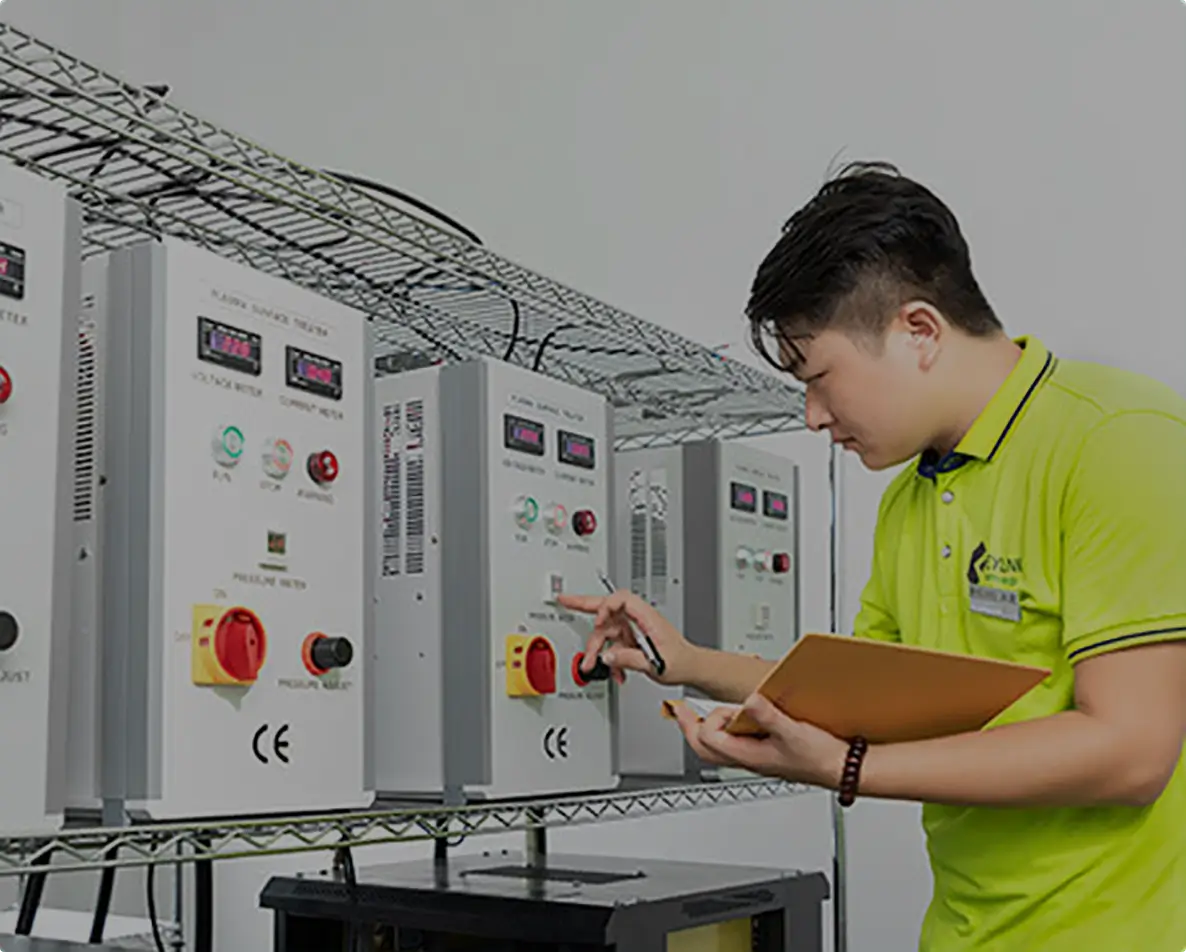
Modern manufacturing often requires more precision, flexibility, and environmental compliance than a flame system can provide. Keylink’s plasma surface treatment machines use high-energy plasma instead of direct heat, making them suitable for both heat-resistant and heat-sensitive materials.

Each unit is engineered with German technology, built from premium components, and certified to ISO9001, CE, LVD, and ETL standards. The range covers standard atmospheric plasma systems and fully customized robotic platforms for different manufacturing needs.
Key advantages include:
- Uniform treatment, even on complex shapes or detailed parts
Compatibility with metals, plastics, composites, and coated surfaces - Low-temperature operation to avoid thermal damage
- An eco-friendly process with no harmful emissions
- Integration into existing lines without major layout changes
- Proven performance in over 100 countries, including markets in Asia-Pacific, Europe, the Americas, and the Middle East
- Full support with technical training, marketing resources, and reliable logistics for smooth adoption
Comparing Flame and Plasma Surface Treatment Machines
Choosing between a flame machine and a plasma surface treatment system means looking at the results you need, your operating costs, and your long-term goals.
Processing Results
A flame treatment machine works well on robust, heat-resistant surfaces but risks damaging delicate materials. Plasma works at lower temperatures, so it handles sensitive plastics, composites, and coated parts without affecting their structure or appearance.
Cost-effectiveness
Flame treatment usually costs less upfront. Plasma systems require more initial investment but can reduce adhesive and coating use by up to 30%, cut down on rework, and improve production consistency — which can balance out the purchase price over time.
Environmental Impact
Flame treatment relies on fuel and produces emissions, requiring ventilation and safety monitoring. Plasma uses compressed air or inert gases and generates no hazardous waste, making it easier to meet environmental regulations.
Equipment Integration
Flame machines can be built for wide treatment areas but require space for fuel and exhaust. Plasma systems, like Keylink’s, integrate directly into production lines with minimal modification, keeping throughput high while adding versatility.

Best Application Scenarios for Each Technology
When Flame Treatment Makes Sense
A flame machine is often the right choice for:
- Large, heat-resistant surfaces such as automotive panels, glass sheets, or metal parts
High-speed processing where thermal resistance isn’t a concern - Operations looking for a lower starting investment
When Plasma Treatment Is the Better Fit
A plasma surface treatment system is better suited for:
- Mixed-material production, including plastics, composites, and coated metals
- Parts with complex shapes that need uniform activation
- Companies aiming to reduce environmental impact while improving process control
Conclusion
A flame machine still has a place in modern manufacturing, especially for high-speed processing of heat-resistant materials at a lower initial cost.
A flame treatment machine is not always the right fit for modern, mixed-material production lines. In those cases, plasma surface treatment, particularly from Keylink, offers precision, material flexibility, and a cleaner process.
By matching each technology to the right application, manufacturers can get the best balance of performance, cost, and sustainability. In many cases, Keylink’s plasma systems are the upgrade that can improve quality, efficiency, and environmental compliance all at once.