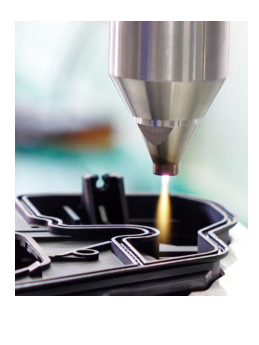
Plasma pre-treatment is a widely used surface activation method in the automotive industry, especially for polymeric headlights, mainly to improve adhesion before bonding.
1. Improvement through Plasma Pre-Treatment
- Surface Activation: Plasma treatment cleans and activates the surface of headlight materials e.g., polycarbonate or acrylic, removing contaminants and creating and creatingreactive sites for better adhesion.
- Remove contaminants, such as oils, release agents, or dust.
- Enhance chemical compatibility between the headlight material and adhesive or coating.
- Improved Wettability: The process increases surface energy, allowing adhesives or coatings to spread more evenly and form stronger bonds.
2. Plasma Technologies used
- Atmospheric Pressure Plasma (APP):
- Often preferred for inline or continuous production
- Uses air, nitrogen, or oxygen gases
- Fast treatment times (seconds)
- No vacuum chamber needed
- Low-Pressure (Vacuum) Plasma:
- More controlled environment
- Longer cycle times
- Greater treatment uniformity
- Gases used: oxygen, argon, or air
3. Process Parameters
- Gas Selection:
- Oxygen: Oxidizes surface, increases wettability
- Air: Common, cost-effective, improves adhesion
- Argon: Gentle cleaning, effective for sensitive parts
- Nitrogen: Improves surface polarity and adhesion
- Exposure Time: Typically short (seconds to minutes), ensuring effeciency in industrial settings.
4. Benefits for Headlight Bonding
- Stronger Adhesion: Plasma-treated surfaces show significantly improved bond strength, reducing delamination risks.
- Reduced Need for Primers: Often eliminates the need for additional chemical primers, simplifying the process.
- Consistency: Provides uniform surface modification, critical for automated production lines.
5. Safety and Compatibility
- Plasma treatment is non-destructive to headlight materials and does not alter bulk properties, making it safe for automotive applications.


For specific industrial setups, optimizing gas composition and treatment time is recommended based on material and adhesive requirements. Please contact Keylink Technology for further technical details on plasma surface pre-treatment.