HVOF and plasma spray are two of the most widely used thermal spray solutions, each excelling in different applications.
HVOF (High-Velocity Oxygen Fuel) coating provides superior hardness, bond strength, and wear resistance, making it ideal for applications requiring extreme durability.
Plasma spraying, on the other hand, offers versatility and can apply a wider range of materials, including ceramics, making it the preferred choice for high-temperature applications like aerospace thermal coating.
The best option depends on the specific performance needs, coating material, and environmental conditions.

What is the HVOF Spray Technique?
HVOF thermal spray is a process that uses a mixture of oxygen and fuel gases, such as propane, hydrogen, or kerosene, to generate a high-temperature, high-velocity flame.
This flame melts the powdered coating material, which is then propelled onto a substrate at supersonic speeds.
The high velocity ensures excellent adhesion, low porosity, and a dense, wear-resistant coating.
HVOF coatings are known for their outstanding durability, making them ideal for protecting surfaces from erosion, wear, and corrosion.
They are widely used in oil and gas, aerospace, and industrial applications where extreme mechanical strength and resistance to environmental factors are required.
What is Plasma Spraying?
Plasma spraying is another thermal spray solution that utilizes a plasma arc as the heat source.
In this process, an electric arc ionizes gases such as argon, nitrogen, or hydrogen, generating plasma flames with temperatures exceeding 15,000°C.
The extreme heat melts powdered coating materials, which are then sprayed onto a surface at high speed.
Plasma spraying is highly versatile and capable of applying metals, ceramics, and composite coatings.
This makes it the preferred method for high-temperature and oxidation-resistant coatings, such as aerospace thermal coatings and medical implants.
Interesting Read: Gas vs Plasma: Key Differences Explained
Key Differences Between HVOF and Plasma Spray
| Aspect | HVOF Coating | Plasma Spraying |
| Heat Source | High-velocity oxygen-fuel flame | High-temperature plasma arc |
| Coating Density | High-density, low porosity | Moderate to high density, higher porosity |
| Adhesion Strength | Excellent adhesion due to supersonic velocity | Strong adhesion but lower than HVOF |
| Material Compatibility | Best for metals and carbides | Suitable for metals, ceramics, and composites |
| Wear & Corrosion Resistance | Exceptional resistance | Good, but dependent on material |
| Coating Hardness | Higher hardness, suitable for high-impact environments | Moderate to high hardness |
| Applications | Aerospace, oil & gas, turbines, wear-resistant parts | Aerospace, biomedical implants, thermal barriers |
Advantages and Disadvantages of HVOF and Plasma Spray
Advantages of HVOF Coating
- Higher coating density: The high-speed impact reduces porosity, enhancing durability.
- Exceptional bond strength: The velocity of the particles results in superior adhesion.
- Superior wear and corrosion resistance: Best suited for harsh industrial environments.
- Minimal oxidation: The controlled flame reduces oxidation during spraying.
Disadvantages of HVOF Coating
- Limited material options: Best suited for metals and carbides, but not ideal for ceramics.
- Higher cost: The process requires specialized flame spray technologies and fuel gases.
Advantages of Plasma Spraying
- Versatile material compatibility: Can apply ceramics, metals, and composites.
- Extreme temperature resistance: Ideal for aerospace thermal coating applications.
- Wider range of applications: Used in biomedical, industrial, and aerospace sectors.
Disadvantages of Plasma Spraying
- Higher porosity: More porous coatings may require post-processing.
- Lower adhesion compared to HVOF: Bond strength may be weaker in high-stress environments.
Applications of HVOF vs Plasma Spray
HVOF Coating Applications
- Aerospace: Coatings for turbine blades, landing gear, and structural components.
- Oil & Gas: Protective coatings for valves, pumps, and drilling equipment.
- Industrial Machinery: Wear-resistant coatings for rollers, shafts, and hydraulic rods.
- Automotive: High-performance coatings for engine components.
Plasma Spray Applications
- Aerospace: Thermal barrier coatings for jet engines and heat-exposed components.
- Medical: Biocompatible coatings for orthopedic implants.
- Power Generation: Coatings for gas turbines and heat exchangers.
- Electronics: Insulating coatings for semiconductor manufacturing.
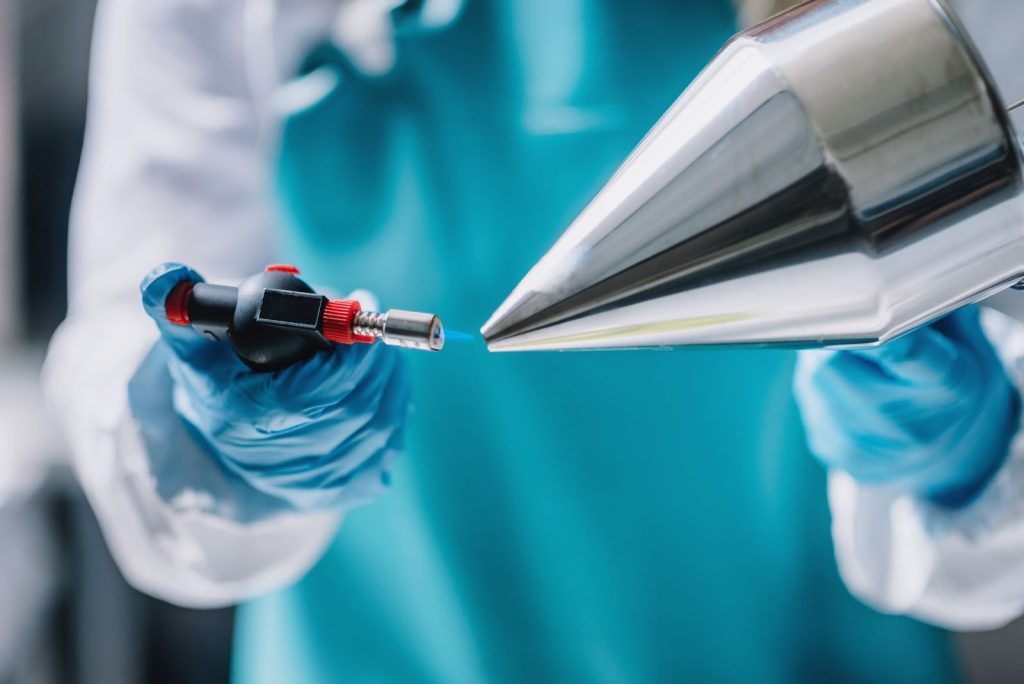
Keylink Technology: A Leading Plasma Coating Manufacturer
Keylink Technology is a leading plasma coating manufacturer in Asia, specializing in atmospheric and low-pressure plasma systems for surface treatment.
Founded by Jill Wu, an engineering expert, and Levi Yang, a sales and marketing specialist, Keylink has rapidly grown since its establishment in 2010.
The company focuses on precision, efficiency, and cost-effectiveness, offering customized plasma solutions to meet high industry demands.
With over 2,000 pre-treatment solutions delivered annually, Keylink enhances adhesion and wettability properties while reducing the CO₂ footprint in manufacturing.
Trust, innovation, and quality remain at the core of its business philosophy.
Final Thoughts: Which is the Best Coating?
The choice between HVOF vs Plasma Spray depends on the intended application.
HVOF coating is superior for wear and corrosion resistance, making it the best choice for mechanically demanding environments.
Plasma spraying, however, is better for high-temperature applications where material versatility is key.
- For extreme wear resistance and adhesion: Choose HVOF thermal spray.
- For high-temperature resistance and ceramic coatings: Choose plasma spraying.
Both thermal spray solutions offer unique benefits, and selecting the right one ensures optimal performance in demanding industrial applications.